
Reflux Surgery and Fundoplication: What Does Research Tell Us?
Gastro-oesophageal reflux disease (GORD) can cause symptoms such as heartburn and regurgitation. When symptoms persist, some people may consider surgery.
Dr Roy Hopkins has a clinical and research interest in fundoplication, an operation used to treat reflux. He was a co-author of a study published in the British Journal of Surgery that examined the long-term results of two types of fundoplication. The study followed patients for 10 years and compared their reflux symptoms, swallowing difficulties and overall satisfaction.
Understanding this research can help patients have informed discussions with their surgeon about the potential benefits and limitations of reflux surgery.
What Is Fundoplication?
Fundoplication is an operation designed to reduce reflux by wrapping part of the stomach around the lower end of the oesophagus. This strengthens the barrier that helps prevent stomach contents from flowing backwards.
Fundoplication can also be performed as part of hiatus hernia surgery. A hiatus hernia occurs when part of the stomach moves upwards through the opening in the diaphragm into the chest. During surgery, the stomach is returned to its normal position in the abdomen, and the opening in the diaphragm is usually repaired.
A fundoplication may then be performed to help reduce reflux and support the function of the valve between the stomach and oesophagus. The type of fundoplication used depends on the patient's symptoms, anatomy and clinical assessment. Not every patient undergoing hiatus hernia surgery will require the same procedure.
Two types of fundoplication were compared in the research study discussed in this article.
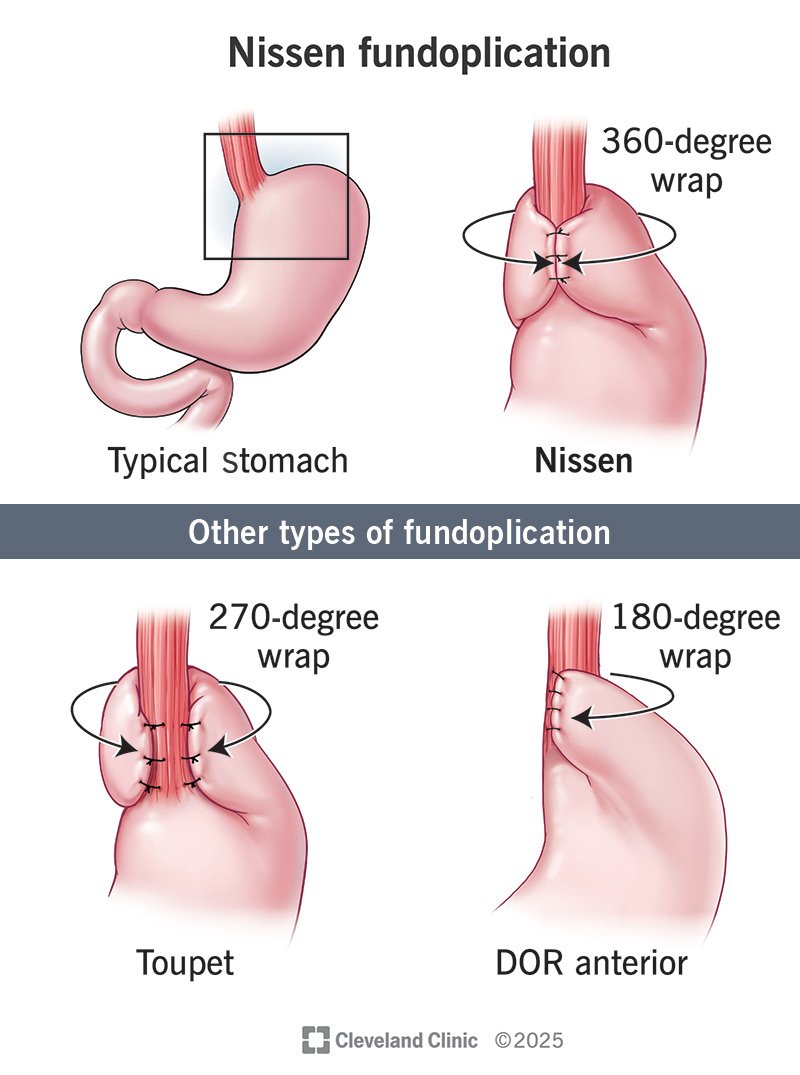
Nissen Fundoplication
A Nissen fundoplication involves wrapping the upper part of the stomach completely around the lower oesophagus. It is also known as a 360-degree fundoplication.
Anterior 90-Degree Partial Fundoplication
An anterior 90-degree partial fundoplication involves placing a smaller wrap around the front of the lower oesophagus. It is designed to reduce reflux while potentially having less effect on swallowing.
What Did the Research Find?
The study followed patients for 10 years after surgery. Of the 191 patients originally enrolled in the two trials, 152 were assessed at the 10-year follow-up.
The researchers compared several outcomes.
1. Heartburn Symptoms
Patients who had a Nissen fundoplication reported lower heartburn symptom scores than those who had an anterior 90-degree partial fundoplication.
2. Swallowing Difficulties
Patients who had a Nissen fundoplication reported more difficulty swallowing solid foods than those who had an anterior 90-degree partial fundoplication.
3. Patient Satisfaction
Overall satisfaction was similar between the two groups. Most patients in both groups felt that their original decision to undergo surgery had been correct.
This highlights the importance of considering the overall experience and outcomes of surgery, rather than focusing on a single symptom or measurement.
Which Type of Fundoplication Is Most Appropriate?
The study found differences between the two procedures. Nissen fundoplication was associated with lower heartburn symptom scores, while anterior 90-degree partial fundoplication was associated with fewer swallowing difficulties.
Overall satisfaction was similar between the groups.
These findings do not mean that one operation is best for everyone. The most appropriate approach depends on a patient's symptoms, clinical assessment, oesophageal function and individual circumstances.
A consultation with Dr Roy Hopkins can help patients understand the available options and the potential benefits and limitations of each procedure.
Considering Reflux or Hiatus Hernia Surgery?
If you experience persistent heartburn, acid regurgitation or other symptoms of reflux, or have been diagnosed with a hiatus hernia, you may be wondering whether surgery could help.
The first step is to understand what is causing your symptoms and which treatment options may be appropriate for you.
Dr Roy Hopkins can assess your symptoms, review any relevant investigations and discuss whether reflux or hiatus hernia surgery may be suitable for your individual circumstances. You can also discuss the differences between surgical techniques, their potential benefits and risks, and what recovery may involve.
Arrange a consultation with Dr Roy Hopkins to discuss your symptoms and explore your options.
Read more about Fundoplication and Hiatus Hernia Surgery
Research Reference
The information provided on this website is of a general nature and should not be considered a substitute for individualised medical advice. It is essential to consult a qualified medical practitioner for personalised advice regarding your health, diagnosis, and management. The content on this site is for general informational purposes only and does not establish a doctor-patient relationship.