
Reflux After Weight Loss Surgery: Could a Hiatus Hernia Be the Cause?
Persistent acid reflux after weight loss surgery can be frustrating, particularly when symptoms continue despite medication. If you experience ongoing heartburn or regurgitation after a gastric sleeve or gastric bypass, a hiatus hernia may be contributing to your symptoms.
Hiatus hernia repair may improve reflux in appropriately selected patients. A specialist assessment can help determine whether a hernia is present, whether it is contributing to your symptoms and which treatment options may be suitable.
Why can reflux occur after weight loss surgery?
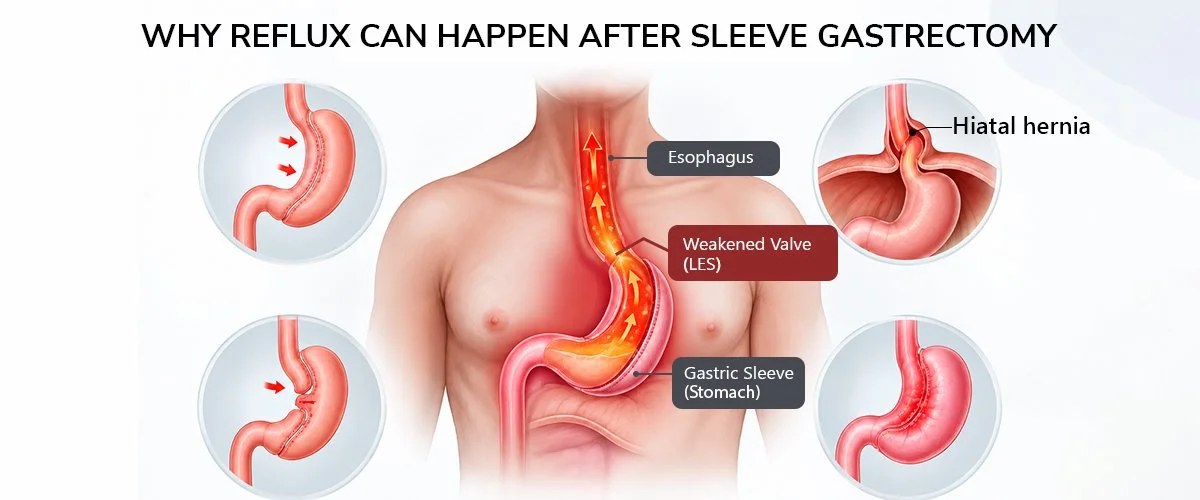
Reflux can develop or worsen after weight loss surgery, particularly following a gastric sleeve. One possible cause is a hiatus hernia, which occurs when part of the stomach moves upwards through the diaphragm.
A hiatus hernia can disrupt the normal mechanisms that prevent stomach contents from flowing back into the oesophagus, contributing to heartburn and regurgitation.
However, reflux after weight loss surgery can have several causes. Investigations are important to identify the underlying problem and guide treatment.
Can hiatus hernia surgery help?
For some patients, repairing a hiatus hernia can improve reflux symptoms.
Surgery involves returning the stomach to its appropriate position and repairing the opening in the diaphragm. Depending on the patient's anatomy and previous weight loss operation, hiatus hernia repair alone may be appropriate.
In other patients, additional surgery may be required to address the underlying cause of reflux. The most suitable approach depends on the type of weight loss surgery performed, the patient's anatomy and the results of investigations.
What if hiatus hernia repair alone is not enough?
While hiatus hernia repair may be suitable for selected patients, it is not the best option for everyone.
Following gastric sleeve surgery, for example, persistent reflux may be related to changes in the shape or function of the sleeve, a hiatus hernia or a combination of factors.
In selected patients, conversion from a gastric sleeve to a gastric bypass may be considered when reflux cannot be adequately managed with medication or other appropriate treatments. Other surgical approaches may also be considered depending on the individual circumstances.
The important first step is to establish why reflux is occurring and determine which treatment is most likely to help. Surgery should be tailored to the patient's anatomy, symptoms and overall health.
Why see Dr Roy Hopkins for reflux after weight loss surgery?
Dr Roy Hopkins provides specialist assessment of hiatus hernia and reflux conditions, including persistent symptoms following weight loss surgery.
Assessment may involve reviewing your previous operation, symptoms and investigation results, with further tests such as gastroscopy or contrast imaging where appropriate.
Dr Hopkins can discuss whether hiatus hernia repair may be suitable or whether another surgical approach, such as conversion surgery, should be considered. The aim is to identify the cause of your reflux and develop an individualised treatment plan.
Persistent reflux after weight loss surgery? Seek specialist advice.
You do not have to assume that ongoing reflux is an inevitable consequence of weight loss surgery. If your symptoms persist despite medication, a specialist assessment may help identify the cause and determine whether further treatment is appropriate.
Dr Roy Hopkins provides specialist assessment of hiatus hernia and reflux conditions in Sydney.
Learn more about hiatus hernia repair or arrange a consultation to discuss your symptoms and treatment options.
The information provided on this website is of a general nature and should not be considered a substitute for individualised medical advice. It is essential to consult a qualified medical practitioner for personalised advice regarding your health, diagnosis, and management. The content on this site is for general informational purposes only and does not establish a doctor-patient relationship.